Lorin Anodised Aluminium: Colour That Is Part of the Metal
Every other coloured aluminium facade gets its colour from something applied to the metal. Lorin anodised aluminium gets its colour from the metal itself: an anodic layer grown out of the aluminium, with the tone sealed inside it. Euroclad now brings Lorin's architectural range to Australia. Here is what it is, how it's made, every colour you can order, and where it belongs on a building.
What Lorin anodised aluminium actually is
Anodising is not a coating. There is no film, no paint and no laminate. The process converts the aluminium's own surface into a hard, integral oxide layer, so nothing can peel, flake or delaminate. There is nothing sitting on the metal: the anodised layer is aluminium.
Lorin Industries pioneered continuous coil anodising and has been refining it since 1953, which makes it the most experienced name in the category and the world's leading continuous coil anodiser for architectural work. Batch anodising treats individual pre-cut pieces, and the shade can drift slightly from batch to batch. Coil anodising runs the aluminium through the process as one continuous ribbon, and the result is the thing architects actually care about: consistency. One facade, one run, one colour, edge to edge.
Euroclad imports Lorin architectural coil at 0.8 mm with a 10 micron anodic layer and forms every panel in-house on the Gold Coast, backed by a 20-year coastal warranty and warranties of up to 30 years in less severe environments.
How it's achieved: five steps, no shortcuts
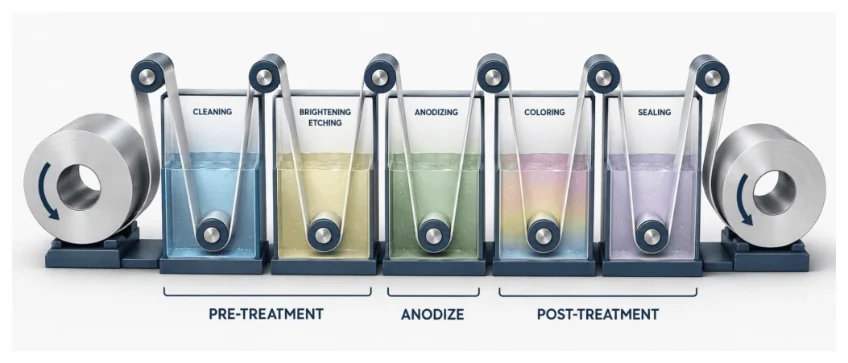
The colour is built in stages, and each one is a pre-condition for the next. Cleaning strips the raw coil of oils, oxides and contaminants, because an anodised finish is only as good as the surface underneath it. Brightening and etching then smooth and control the surface, which is what gives anodised aluminium that liquid, light-reactive character no paint line can imitate. Anodising is the step that does the converting: the coil passes through an electrolyte bath under electrical current, and a hard, porous anodic film is grown out of the aluminium itself to a tightly controlled thickness. Colouring exploits that porosity. Through absorptive dyes and electrolytic colouring, tone is deposited into the open pore structure rather than onto the surface. Finally, sealing closes the pores, locking the colour inside the layer and leaving a surface highly resistant to staining, abrasion, UV and colour degradation.
That last step is why anodised aluminium behaves so differently from painted product over the decades. The colour is never exposed to the weather. It is sealed inside a mineral-hard layer of the metal itself.
The colours: pick one, order it, keep it
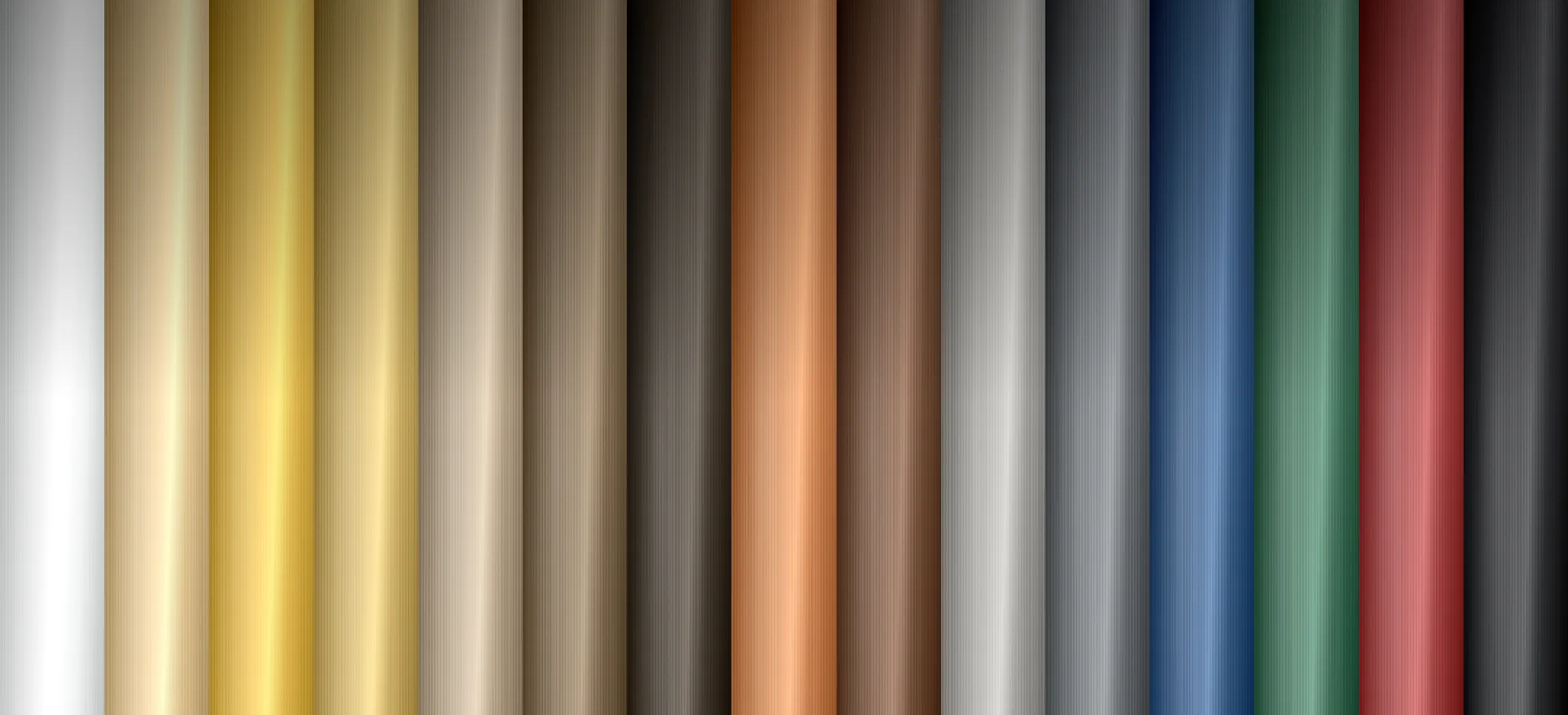
Because the finish is the metal, the palette reads like metal, with depth, grain and light-play rather than flat pigment. Colours are made to order for each project from Lorin's full architectural palette, so a facade is never limited to whatever happens to be on a shelf.
The copper tones deserve first mention. CopperBrite®, Copper Penny, Medium Antique Copper and Dark Antique Copper deliver genuine copper character at aluminium weight and cost, and the colour is fixed: the warmth you choose is the warmth the building keeps, with none of copper's evolving patina. AnoZinc® does the same for zinc grey. If you love the look of the living metals but the design demands a colour that never moves, this is the answer.
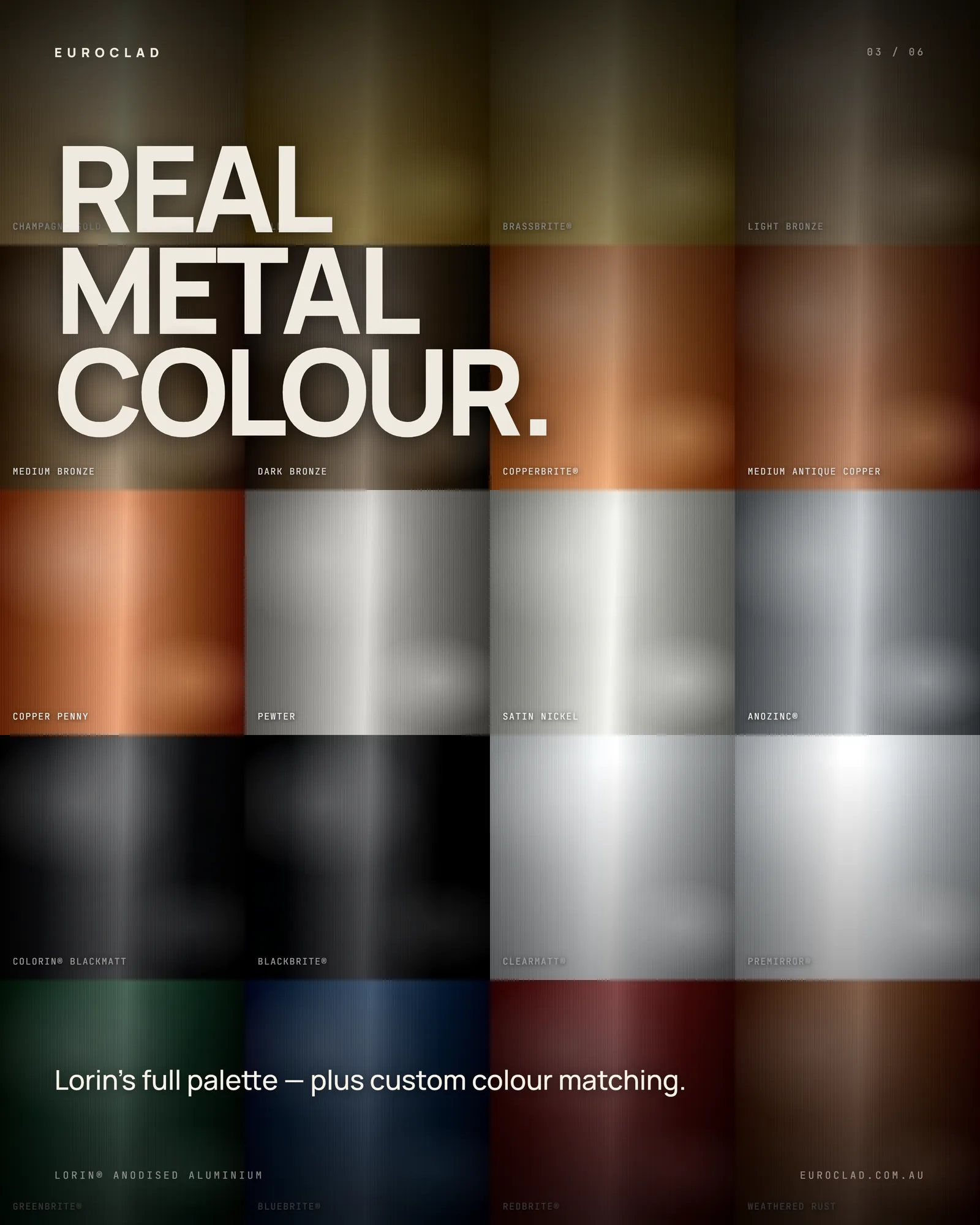
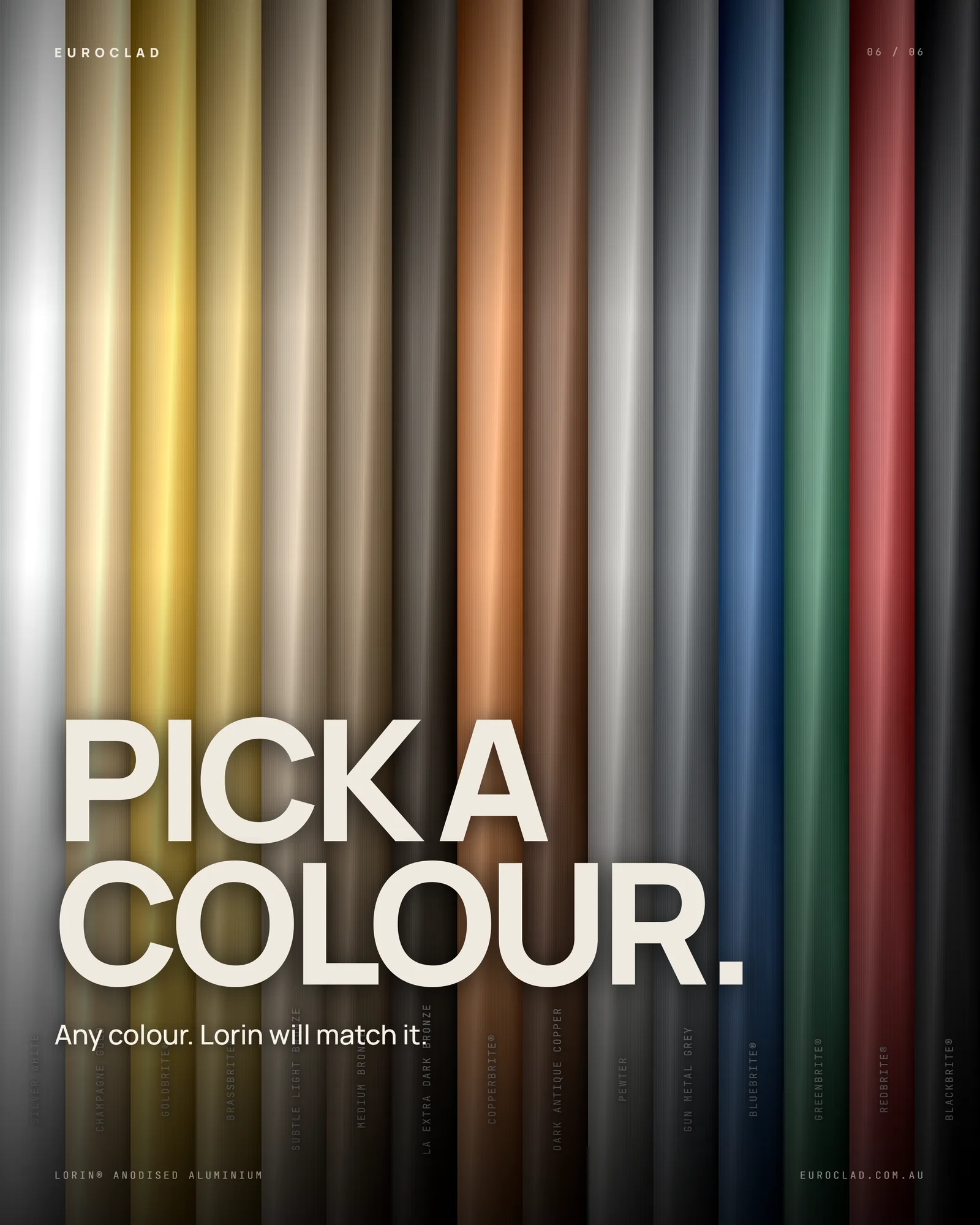
Around them sits the rest of the palette: brights and silvers (Silver White, ClearMatt®, PreMirror®, Satin Nickel, Pewter); golds and brasses (Champagne Gold, GoldBrite®, BrassBrite®); the full bronze family (Subtle Light Bronze, Light Bronze, Medium Bronze, Dark Bronze, LA Extra Dark Bronze); greys (Gun Metal Grey); blacks (BlackBrite®, Colorin® BlackMatt); and statement tones (BlueBrite®, GreenBrite®, RedBrite®, Weathered Rust).
And if the design calls for something that isn't in the palette, Lorin colour-matches to order. Any colour, matched in real anodised metal. Custom work carries minimums and lead times, so raise it at specification stage.
Where it can be used
Anodised aluminium earns its place anywhere the design demands real metallic character with fixed colour. Facades and wall cladding are the headline application. Lorin coil forms cleanly to Euroclad's architectural profiles, including standing seam, flat-lock, interlocking panels and cassette panels. Roofing, soffits and gutters follow the same logic on the roofing side. And because the finish is hard, stable and fully VOC-free, it moves indoors effortlessly: ceiling panels, lift lobbies, feature walls and joinery details that need to match the envelope exactly.
Coastally, it is one of the strongest answers available. Aluminium self-passivates, continuing to protect itself at cut edges and fixing points, and the sealed anodic layer sits in the C5 severe-marine band alongside copper, zinc and the Euramax Diamond specification. At roughly 1.1 kg/m² in 0.8 mm coil it is the lightest premium facade metal on the market, which buys longer spans, bolder cantilevers and easy retrofits. Underneath, we specify plywood as standard, 18 mm to roofs and 15 mm to walls, with fibre cement or steel decking where a fire or BAL zone genuinely requires a non-combustible substrate. Our corrosion-zone guide maps where each metal belongs, and anodised Lorin holds the front row.
There is a sustainability dividend too. Aluminium is recyclable at end of life, the anodising process adds no VOCs, and light-toned anodised surfaces reflect heat rather than storing it, all of which counts toward green building credentials.
New to Australia. Not new.
Honesty first, as always: there are no completed Euroclad Lorin projects in Australia yet. The range has only just arrived here. But continuous coil anodised aluminium has been specified on institutional, commercial and civic architecture internationally for decades, and Lorin has been making it since 1953. That is exactly the evidence base you want behind a facade finish, and we would rather show you real samples than borrow somebody else's photography.
Order Lorin samples in your site's own light, tell us your suburb and exposure, and we will tell you plainly whether anodised, PVDF or another metal entirely is the right specification, including when it's the cheaper one.
Wondering which metal is right for your site? Answer three questions and find out.
Try the Material Advisor Talk to Euroclad