 Est. 2008
Est. 2008
Est. 2008
On a facade, standing seam draws clean parallel lines that architects design entire elevations around. The 25 mm raised seam throws precise shadows; concealed stainless clips let the metal breathe through Queensland's thermal cycles without a single visible fixing.
Pans are folded to the millimetre in our workshop, run vertically, horizontally or diagonally, and can curve to a 1.5 m radius. Seams mitre directly into roofing pans for a flashing-less junction — the detail that separates specialist work from sheet-metal work.
Slight waviness ('oil canning') is an inherent visual characteristic of all flat-pan architectural metal, not a defect. We minimise it through panel-width selection, substrate preparation and tension-levelled coil — talk to us about matte finishes and narrower pans for critical elevations.
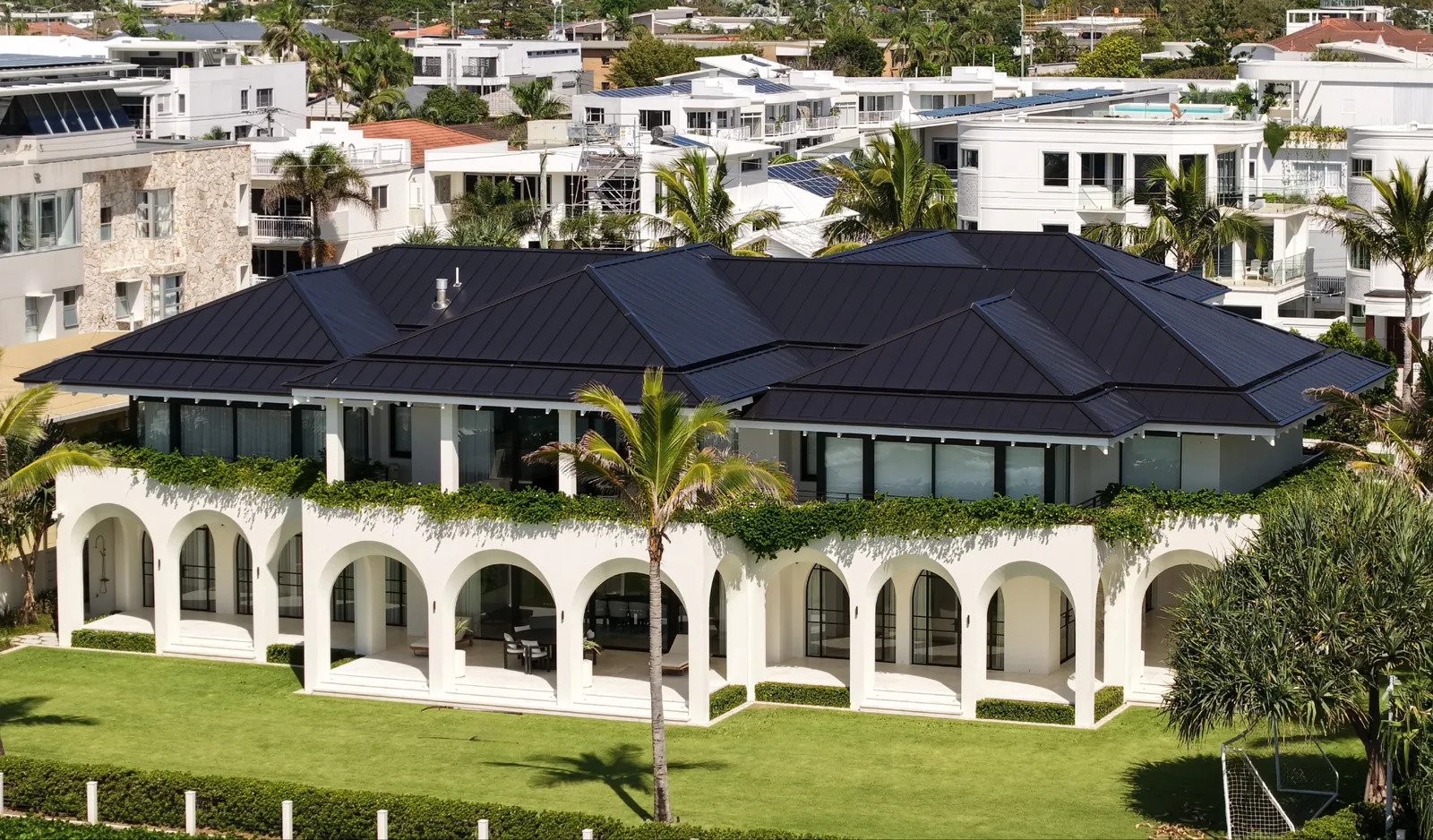
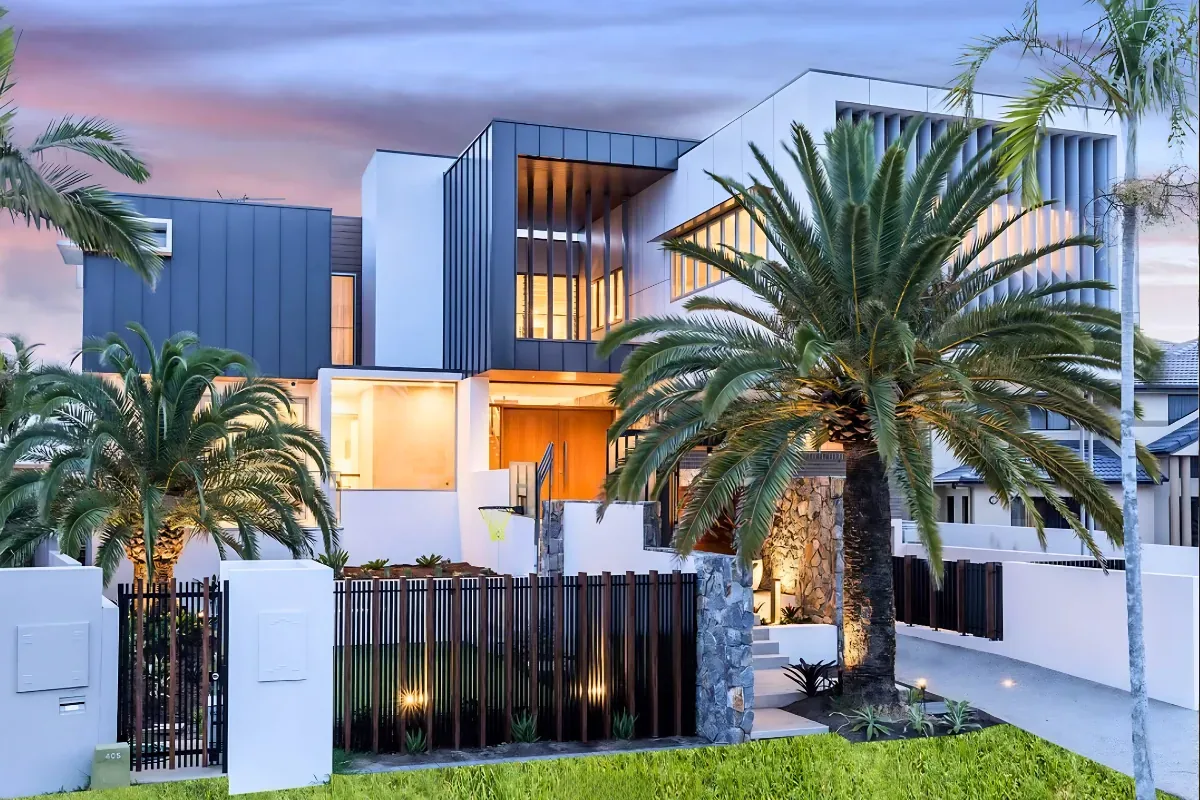
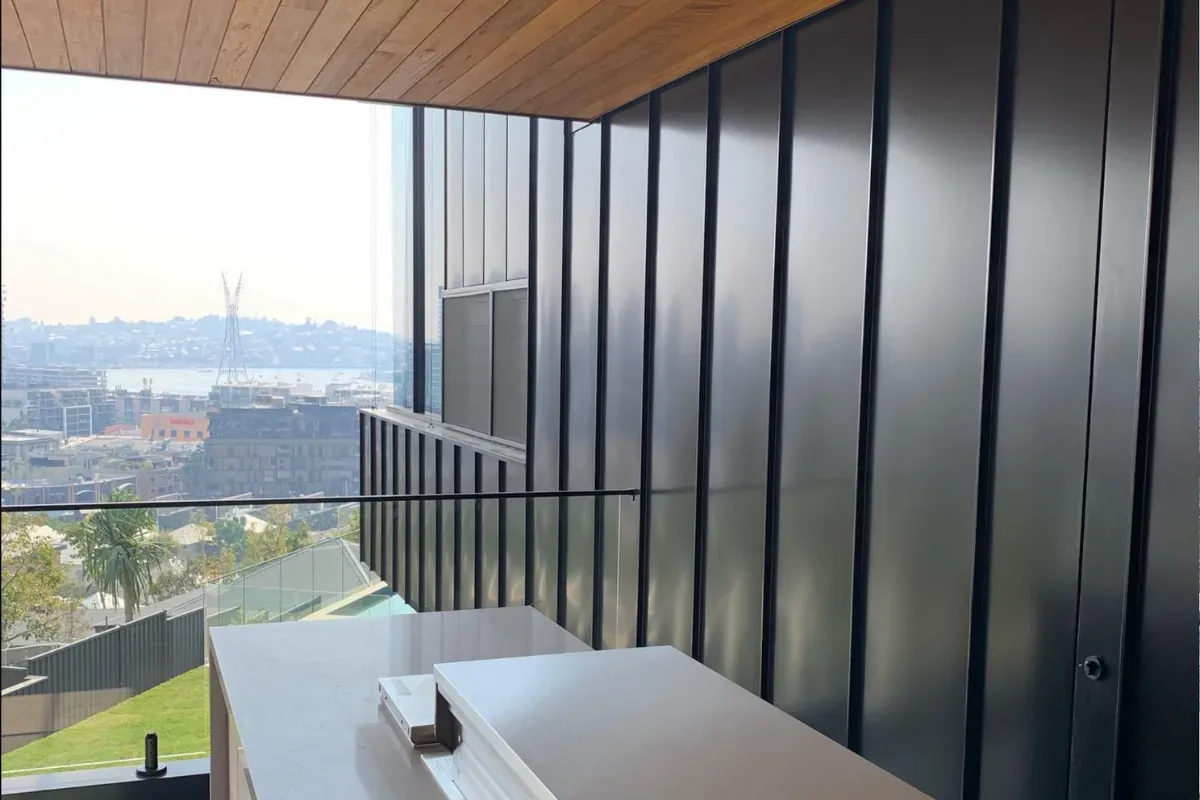
The junctions. Anyone can run pans up a flat wall; the craft is in mitred seam-to-roof transitions, folded panel ends around openings, and pan layouts that land symmetrically on every elevation. That's shop-drawing work we do in-house before a single panel is folded.
Yes — both. Every panel is roll-formed and folded in our Gold Coast workshop, and installation is carried out by our own trained teams, not subcontracted. One point of responsibility from shop drawing to final flashing, backed by QBCC (1283171) and NSW (276164c) licences.
Yes — panels curve to a 1.5 m radius in both directions, letting facades wrap curved walls and barrel forms without faceting.